
🔖 myFYI: Evangelism to me is about “You never mentioned Him to me.”
Many times I groan thinking about family, friends, acquaintances who have passed, that I could have told them about Jesus; and didn’t.
For me there is great grief to think about those who knew about Jesus and didn’t believe:
“…will be cast out into outer darkness. There will be weeping and gnashing of teeth.”
— Matthew 8:12 (NKJV)
And their family & friends in eternal Hell, screaming “Why didn’t you mention Jesus to me”.
Just to think in 2025, there are ~200,000 dying each day to eternal Hell!
Representative Text:
1 When in the better land before the bar we stand,
How deeply grieved our souls may be;
If any lost one there should cry in deep despair,
“You never mentioned Him to me.”
Refrain:
“You never mentioned Him to me,
You helped me not the light to see;
You met me day by day and knew I was astray,
Yet never mentioned Him to me.”
2 Oh, let us spread the word where it may be heard,
Help groping souls the light to see,
That yonder none may say, “you showed me not the way,”
“You never mentioned Him to me.”
3 A few sweet words may guide a lost one to His side,
Or turn sad eyes on Calvary;
So work as days go by, that yonder none may cry,
“You never mentioned Him to me.”
Author: James Rowe (Pseudonym: James S. Apple)
From: The New Wonderful Songs for Work and Worship #65
Source: Hymnary.org
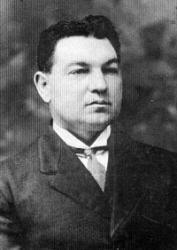
About the Author: James Rowe was born in England in 1865. He served four years in the Government Survey Office in Dublin, Ireland, as a young man. He came to America in 1890, where he worked for ten years for the New York Central & Hudson River Railroad Company. He then served for twelve years as superintendent of the Mohawk and Hudson River Humane Society. He began writing songs and hymns around 1896 and became a prolific gospel writer, with more than 9,000 published hymns, poems, recitations, and other works.
Source: Dianne Shapiro, from “The Singers and Their Songs: sketches of living gospel hymn writers” by Charles Hutchinson Gabriel (Chicago: The Rodeheaver Company, 1916)